
Impact of radiotherapy on CTCL immune environment characterized
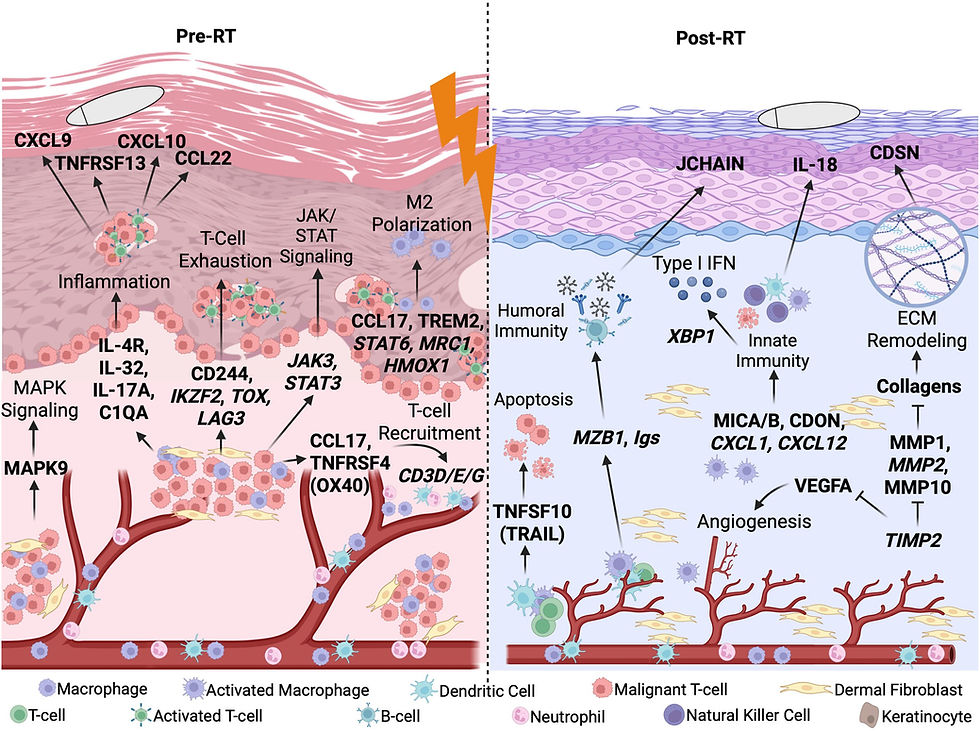
Researchers have discovered how radiotherapy alters the immune environment within cutaneous T-cell lymphoma (CTCL) tumours, according to findings published in the Journal of the American Academy of Dermatology.
The study reveals how radiotherapy not only eliminates cancer cells but also reprograms the surrounding tumour microenvironment, revealing new molecular signatures associated with long-term treatment response and tumour recurrence.
“Our findings show that radiation does much more than kill lymphoma cells; it fundamentally reshapes the immune ecosystem surrounding the tumour,” said co-senior author Alan Zhou, MD, in a press release from Northwestern University in Evanston, Ill. “Understanding these immune changes may help us predict which patients will have durable responses and identify new therapeutic strategies that enhance the long-term effectiveness of radiation.”
Dr. Zhou is an associate professor of dermatology and chief of the Division of Medical Dermatology at Northwestern.
In the press release, the authors note that radiotherapy is one of the most effective treatments for CTCL. However, while many tumours remain in remission after treatment, others will recur despite initially responding.
To better understand the molecular effects of radiotherapy in CTCL tumours, the scientists studied paired skin biopsy samples and non-invasive skin tape-strip samples collected from patients with CTCL before and after radiotherapy.
They then used spatial transcriptomics and high-dimensional proteomics to characterize gene expression within the tumour microenvironment and to measure proteins released from the skin.
“This is the first study to show that we can use painless tape strips to track disease-related protein biomarkers in cutaneous lymphoma over the course of treatment,” Dr. Zhou said. “That could one day make it much easier to monitor patients and personalize their care.”
By analyzing these samples, the scientists found that before radiotherapy, the tumours exhibited molecular hallmarks of CTCL, including inflammatory signalling, exhausted T-cells and macrophages promoting tumour growth.
After radiotherapy, however, they found the immune landscape in the tumours changed significantly, including decreased tumour-associated inflammatory pathways, increased wound-healing programs and innate immune activation. Unexpectedly, the investigators also observed activation of humoral immune pathways involving antibody-producing immune cells.
“These results suggest that antibody-mediated immunity may play a much larger role in anti-tumour responses than previously appreciated,” said Dr. Zhou, who is also a member of the Robert H. Lurie Comprehensive Cancer Center of Northwestern University.
Researchers also observed molecular differences between patients whose tumours remained in remission and those whose tumours recurred within one year of treatment.
Recurrent tumours showed increased expression of genes associated with radiation resistance and persistent inflammation. In contrast, tumours that remained in remission exhibited stronger interferon signalling and sustained humoral immune activation following radiotherapy.
The findings suggest that these molecular biomarkers could help identify CTCL tumours at greater risk of recurrence earlier, said Dr. Zhou.
He added that the study also demonstrates the feasibility of using non-invasive skin tape strips to monitor longitudinal molecular changes within a tumour, allowing patients to be observed over time without repeated skin biopsies.
“Patients with cutaneous lymphoma often undergo multiple biopsies throughout the course of their disease,” Dr. Zhou said. “Our findings suggest that non-invasive tape strips may provide a practical way to repeatedly monitor disease-relevant biomarkers over time. We envision a future where we can combine molecular profiling of tumours with simple skin sampling to personalize treatment decisions and track how patients are responding.”
Dr. Zhou said the current study opens new opportunities to develop combination therapies that enhance anti-tumour immunity while bringing precision medicine closer to routine clinical care.


Comments